Tuesday, October 18, 2011

Fine-scale behaviors vs. Coarse-scale movements

One of the central things I am focusing on with the toad experiments, besides learning, is exploratory behavior. This is something that has been very challenging to think about, because toads aren't usually thought of as 'explorers'. Most animals used for these types of experiments are mammals and birds, who have very specific behaviors that can be characterized as 'exploratory' (i.e. a mouse moving it's whiskers and sniffing an object, or a bird turning its head to look about itself). Toads, however, don't really have fine-scale movements that are historically classified as exploratory. From watching them for so long, I know that they will re-position their heads and bodies to see an object or area better, but it's very hard to tell if they're doing that from the camera angle that we have, which is what we need to get the entire arena in the video frame. It's a trade-off I had to make at the very beginning of the experiment - I couldn't have fine scale video that would capture all of the toads' behaviors, AND coarse-scale video that could capture the entire arena. Clearly, I chose coarse-scale. In the end, I'm more interest about the movement of the toads around the arena, rather than their movement in a specific area or context.

Coarse-scale: The whole arena is in the picture, but you can't really see what the toad is doing
(can you spot the toad in the picture?) 


Fine-scale: A great view of the toad's body position, posture and behavior, but we can't see the whole arena
(not good for pinpointing location within the arena)


BUT.... I'm still interested in exploratory behavior. So what to do, what to do?

Do you have any ideas for me? How can we still look at exploration without being able to see what the toad is doing up close?

Monday, October 10, 2011

Supporting Toads in California!

This week I'm heading to Anaheim for the National Association of Biology Teachers Professional Development Conference (NABT for short). This is my first national conference by myself; I'm really excited! Better yet, I will be presenting a poster about Adventures in Toading, and it's use for connecting research to education. I'm hoping to reach a new audience and make some new contacts, and also learn about what science teachers really need from outreach programs such as this one.

I'm heading out on Wednesday afternoon and won't be back until Sunday night, but you can definitely expect a post about the conference next week. Until then, here's a great resource that I just linked on my main page:

The Texas Parks and Wildlife website for amphibian conservation and outreach - they have a ton of information about Texas frogs and toads, how to go "frogging", and how to get involved with amphibian research. You can read my synopsis at the bottom of this page.  They also have a PowerPoint presentation with great slides highlighting the most common anurans in Texas. Check out two of my favorites here:


That's all for now - see you in California! :)

Tuesday, October 4, 2011

And so it goes...

So the research is a'going - nothing new to report this week, just more of the same. We're a little over halfway done with set 2 toads, and they're doing basically the same things that the Panama toads did... which is good, I think. I won't really know until I get all of the data collected and analyzed, which will be sometime around the winter break... so we'll see what happens!

For now, this great website appeared in my inbox this morning: http://www.spongelab.com/

SpongeLab has all sorts of great games and simulations for learning about STEM fields. You have to register to use the resources on the website, but it's free so far as I can tell, so it's totally worth it. Enjoy!

Thursday, September 29, 2011

Data, data, everywhere, and not a trend to believe!

Am I talking about my data? No, thank Darwin.

Today I'd like to talk about a problem that we're continually facing as a society; the overload of information that reaches our ears and eyes - especially in the form of numbers! It seems like I can't turn on the TV these days without seeing some new statistic about what will kill me or what kind of food I should eat. Seriously people, do I eat the egg yolks or not?? Make up your minds!

I'm currently taking a statistics course taught by a brilliant biological statistician at Texas Tech. He's one of those teachers that you just sit and absorb; I imagine if I was a scholar at the School of Athens, I would feel the same way about Plato or Socrates, but I digress. Statistics is what I want to talk about today. Numbers. It's hard to know what numbers to believe; how do we tell the fact from the fiction?

Unfortunately, the only way to find out what's real is to fact-check every piece of information you see. The best way to do this is get on Google Scholar and find the primary resource. Thankfully in science, the peer-review process of publication almost always weeds out those claims that are based in fiction or "noisy" data. But sometimes, those papers still slip through the cracks. We only know as much as those who've done science before us, and we can only do as much as the current technology allows us to. Sometimes it's hard to believe that at one time it was commonly thought that the Earth was flat - and that notion was probably based on something science-like!

So why am I taking the time to talk about this? Well, I think it's important that I (and you and everyone else) don't just absorb all of the information we hear, no matter what the source - with popular media, you never really know the source of the information. The only way to find the true meaning behind all the numbers is to look at the numbers yourself!

And on that note, an interesting email came through my inbox this morning; a post about using climate change and other "hot" environmental topics' data sets to boost inquiry learning in the classroom. Don't worry, I have a link: Macroecology Environmental Education. This website, funded through the ESA (Ecological Society of America), has valuable information about how to use data sets in the classroom, and some resources and links to example data sets. This sort of resource exemplifies one of the hardest parts of science to translate for students; we know what we know because of numbers. Mind effectively blown.

How do you feel about data sets? Do large batches of numbers make you want to scream and run away? Don't worry, you're not alone! :)

Tuesday, September 27, 2011

Working overtime - good stuff :)

This week's post is going to be short and sweet - I've been hard to put some finishing touches on my personal portfolio website. Without further ado - here it is! :)

Website Link: www.myweb.ttu.edu/aarner


Please leave me comments on things you'd like to see, or ways I can make the information easier to access. Enjoy!

Tuesday, September 20, 2011

♬ You can't always get what you want ♬

So we just finished round 1 of trials back here is Lubbock, and unfortunately, things aren't going quite as planned. If you remember, my hypothesis about the lab toads (from the invasive range) is that:

Cane toads from the invasive range (S. Florida) are, on average, more exploratory and better learners than toads from the native range (Panama).


Why did I think this? Well, when an animal is invasive, it is more likely to encounter novel (new) environments and items. High exploration and mobility would allow toads to gather more information. If the toads use this information to locate food resources, then they are learning.

However as I said, things aren't going quite as planned. Why not, you ask? Well, I'm honestly not sure. You see, we have a confounding factor. A confounding factor is something that may alter the response variable (in this case, the behavior of the toads in the arena) without prior knowledge. In the first round of trials, the confounding factor seems to be... moonlight.

Yes, the moonlight. The bulb that I went out of my way to purchase and install in the arena room. I didn't think about it beforehand, but the bulb is purple/blue tinged to "mimic" moonlight. We discovered over the summer that blue colored plastic has an interesting effect on the toads; they seem to calm down and stop struggling. We termed this blue plastic "the blue cone of silence", and thought nothing of it other than being a funny anecdote. Well, fast forward to the beginning of the first round of trials. Arena set up, lighting in place, toads are ready - and they hardly move at all. And of course, it just so happened that the first day of trials I tested all 3 experimental group individuals in this round - so I have no idea if they were just unmotivated, if the light affected them adversely, or if there's something else going on altogether. I immediately switched back to using the low-intensity LED lights I had used in the pilot study, but the damage had already been done. Oh well, such is science sometimes!

The good news is that we're starting round 2 on Monday of next week, with 5 more toads. Hopefully I'll be able to discern what's really going on, and make further predictions about the behavior of the lab toads. Until then, I'm working hard on about 6 other writing projects, and trying to finish gathering my data from this summer. The life of a graduate student is busy, busy, busy!

Thursday, September 8, 2011

When it comes to science, is it better to be a face or a name?

Hi folks,

Sorry I skipped out on Tuesday - I only have myself to blame, no excuse. :( Actually, I do have an excuse - I started toad trials on Monday, and this week has proven to be a little hectic. Oh, well, cest la vie right?

I'll share some info about the project next time, but for now I wanted to talk about an interesting topic; the 'faces' of science. There are a great many scientists who contribute to their respective fields, yet most of them are unknown by the public. I mean, think about it - how many Nobel prize winners can you name? Fortunately, because no one really becomes a scientist in order to be famous (although everyone hopes for that 'breakthrough' that gets their name out there)!

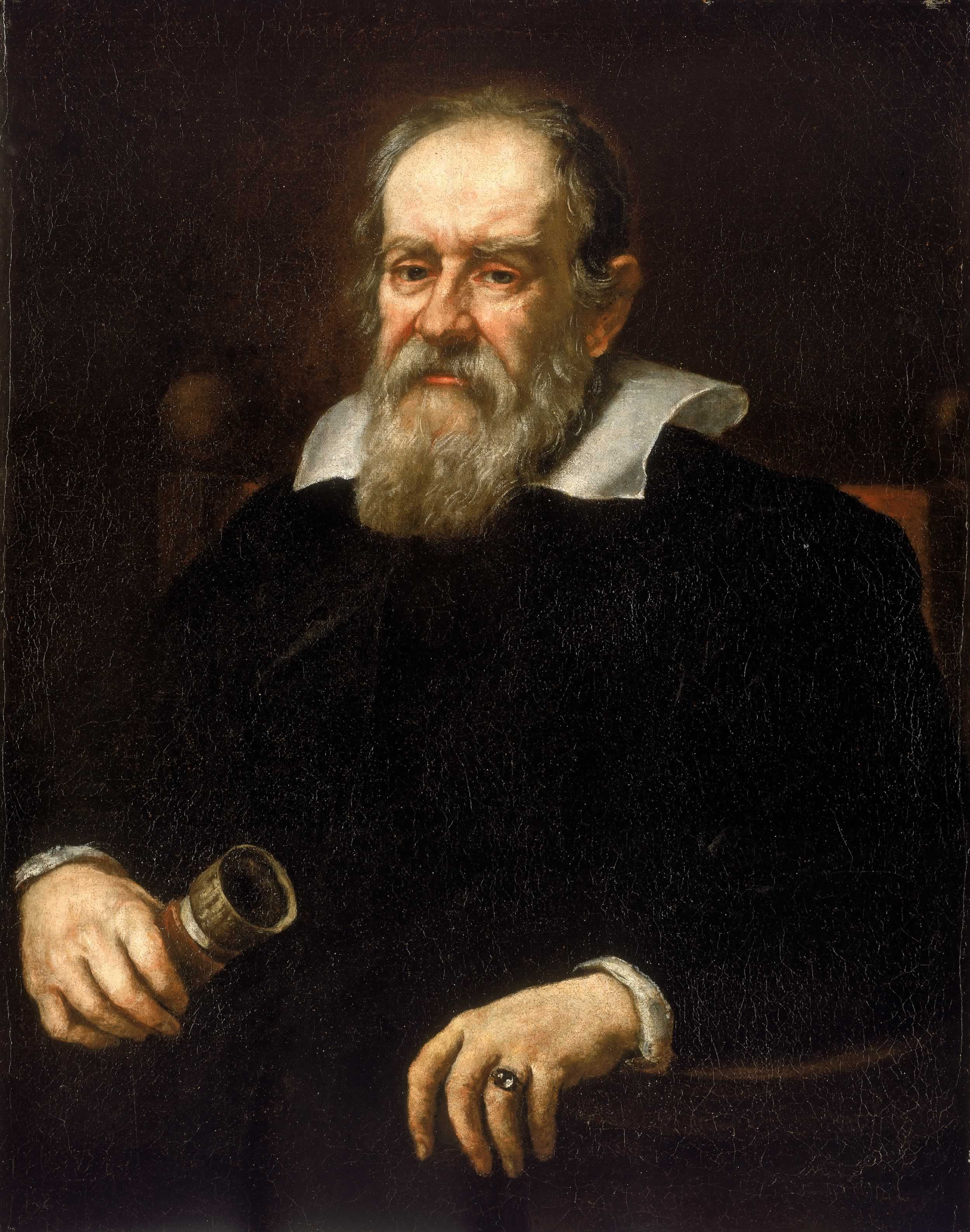
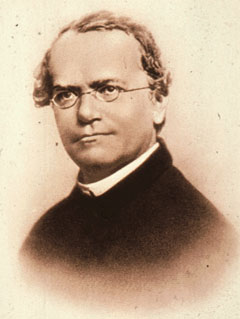
Some scientists are so well known that anyone can recognize them by name, but can you name these well-known thinkers by their faces?


From top to bottom, we have Galileo Galilee, Sir Isaac Newton, Benjamin Franklin, Gregor Mendel, Thomas Edison, Watson and Crick, and Albert Einstein. How many of these did you guess right? Do you know what each scientist is responsible for contributing to the field?

Don't feel too bad if you didn't recognize many of these scientists - most lived long before the use of video cameras or photography. Today's technological advancements make it much easier to identify people as "famous".

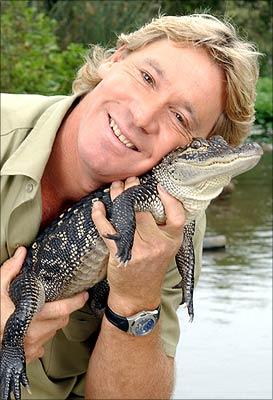
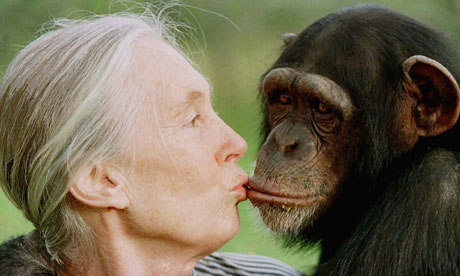
Here are a few of the more contemporary "faces of science" that you may recognize:


You may have been able to name these right off the bat! Top to bottom: Jack Hannah, Jeff Corwin, Steve Irwin, Jane Goodall, and Steven Hawking (OK, so he's not a conservationist, but he's a cool scientist!) Of these "modern scientists", do you know what they contributed to each of their respective fields?

Now here's some food for thought: Is it better to be well-known for who you are, or for what you did?